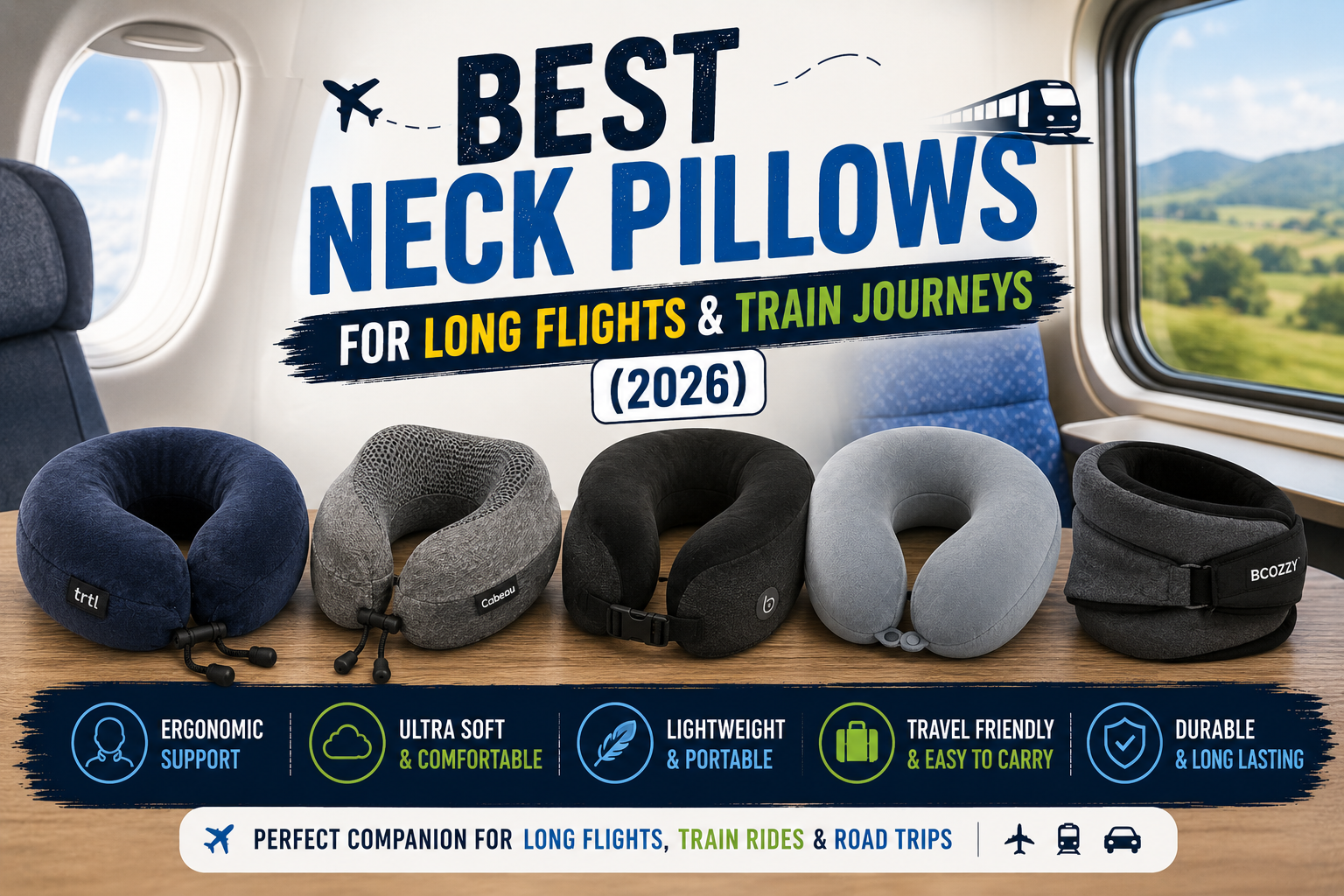
The best neck pillow depends on your journey type: memory foam (₹500–1,500) wins for comfort on flights and Volvo buses; inflatable pillows (₹250–700) win for backpackers who value packed size; and microbead pillows (₹200–500) are the budget middle ground. For sleeping upright, look for raised side bolsters and a flatter back section — the design detail that matters more than the filling.
A neck pillow is either the reason you arrived rested or the lump of fabric you carried across India for nothing. The difference is matching the type to your journey — here’s the honest breakdown.
The Three Types, Honestly Compared
| Type | Price | Packed Size | Comfort | Lifespan | Best For |
| Memory foam | ₹500–1,500 | Large (compresses somewhat) | Best | Years | Flights, AC buses, frequent travellers |
| Inflatable | ₹250–700 | Tiny (fist-size) | Decent | 1–2 years (puncture risk) | Backpackers, occasional use |
| Microbead | ₹200–500 | Medium (doesn’t compress) | Okay | Beads flatten in months | Budget buyers, kids |
The uncomfortable truth about U-shapes: the classic uniform U pushes your head forward — the exact posture that causes neck pain. Better designs have higher side walls and a thin or open back, supporting the sideways head-drop that actually happens when you sleep upright.
Best Picks in India 2026
(Attach your amzn.to affiliate links to product names.)
1. Memory foam contoured pillows (Wakefit, Sleepyhead, The White Willow, Cloudz-type) — Best Overall
India’s mattress brands now make excellent travel pillows: slow-rebound foam, raised side bolsters, washable covers, and snap buttons to hang on a backpack strap. The ₹600–1,200 range from a mattress brand beats no-name “memory foam” (often just cut sponge) at ₹300.
Pros: Real support, durable, washable covers. Cons: Bulkiest option — it travels clipped outside your bag.
2. Inflatable ergonomic pillows (Decathlon, TRAJECTORY, Amazon basics-type) — Best for Backpackers
Modern inflatables improved hugely: flocked soft-touch surfaces, adjustable firmness (your firmness preference is one breath away), and packing down smaller than a water bottle — they earn a place in our gadgets under ₹1000 kit.
Pros: Tiny packed size, adjustable, cheap. Cons: Crinkly feel for some, puncture mortality, mid-journey re-inflation.
3. Microbead pillows — Best Under ₹300
The railway-platform classic. Conforms pleasantly at first; beads compress and flatten with months of use.
Pros: Cheapest, soft, kid-friendly. Cons: Short lifespan, zero washability for most, bulkier than inflatables.
4. Wrap/scarf-style support (Trtl-type designs) — Best for Side-Sleepers
A fleece scarf with an internal brace that holds your head laterally — looks odd, works well, packs flat. Indian and imported versions run ₹800–1,800.
Pros: Real lateral support, packs flat, doubles as a scarf. Cons: One-side support at a time; warm in summer.
5. The convertible blanket-pillow sets — Best for Indian Railways
For Sleeper-class veterans: pillow + blanket combos and stuffable pillowcases (fill with a hoodie) solve the train-bedding problem in one item — we cover full train comfort setups in our Railways travel kit guide and train travel tips.
Match the Pillow to the Journey
- Flights (3+ hours): Memory foam with high side bolsters. Economy seats barely recline; lateral support is everything. (First-time flyer? Full guide here.)
- Overnight Volvo/sleeper buses: Memory foam again — bus headrests are neck-pain machines, and hill-road sway demands real bolsters.
- Trains: Different problem! You lie flat on a berth, so a regular small pillow or stuffable pillowcase beats a U-pillow. U-pillows on trains only help seated daytime journeys (2S/CC).
- Backpacking multi-modal trips: Inflatable — the only type whose packed size survives a rucksack audit.
- Office-to-airport frequent flyers: Wrap-style or premium memory foam that clips to your cabin trolley.
Buying Checklist (60-Second Version)
- Side bolster height — taller than the back section? Good design.
- Cover: removable and washable, or it becomes a hygiene item you’re embarrassed by within months.
- Attachment: snap button or strap to clip outside the bag — pillows carried inside a bag get left at home next trip.
- Genuine foam test (in person): slow rebound when pressed = memory foam; instant spring-back = sponge wearing a costume.
- Weight: under 350g keeps it from being the item you resent.
Do You Even Need One?
Honest answer: if your travel is mostly train berths and short flights, a hoodie rolled into a stuffable case does 80% of the job — budget travellers following our ₹10,000 trip method can skip the purchase guilt-free. If your year contains multiple long flights or overnight buses, the ₹700 memory-foam investment repays itself the first time you arrive without the cricked-neck headache.
FAQ: Travel Neck Pillows
Which type of neck pillow is best for travel?
Memory foam is best for comfort on flights and buses; inflatable is best for backpackers prioritising packed size; microbead is the budget option with the shortest lifespan.
Are neck pillows useful on Indian trains?
On berths you lie flat, so a small regular pillow or stuffable pillowcase works better than a U-pillow. U-shaped pillows help only on seated daytime trains and buses.
What should I look for when buying a neck pillow?
Raised side bolsters with a flatter back section, a removable washable cover, slow-rebound foam (for memory foam), and a clip to attach it outside your bag.
Is memory foam worth the extra price?
Yes for frequent flyers and overnight-bus travellers — genuine memory foam supports the head’s sideways drop and lasts years. Verify slow rebound; cheap “memory foam” is often plain sponge.
How do I carry a bulky neck pillow while backpacking?
Clip it outside the bag via its snap button, or choose an inflatable that packs to fist-size inside.
Can a neck pillow prevent neck pain completely?
It reduces strain significantly but can’t overcome terrible seat angles. Pair it with reclining when possible, lumbar support (a rolled jacket), and changing positions hourly.