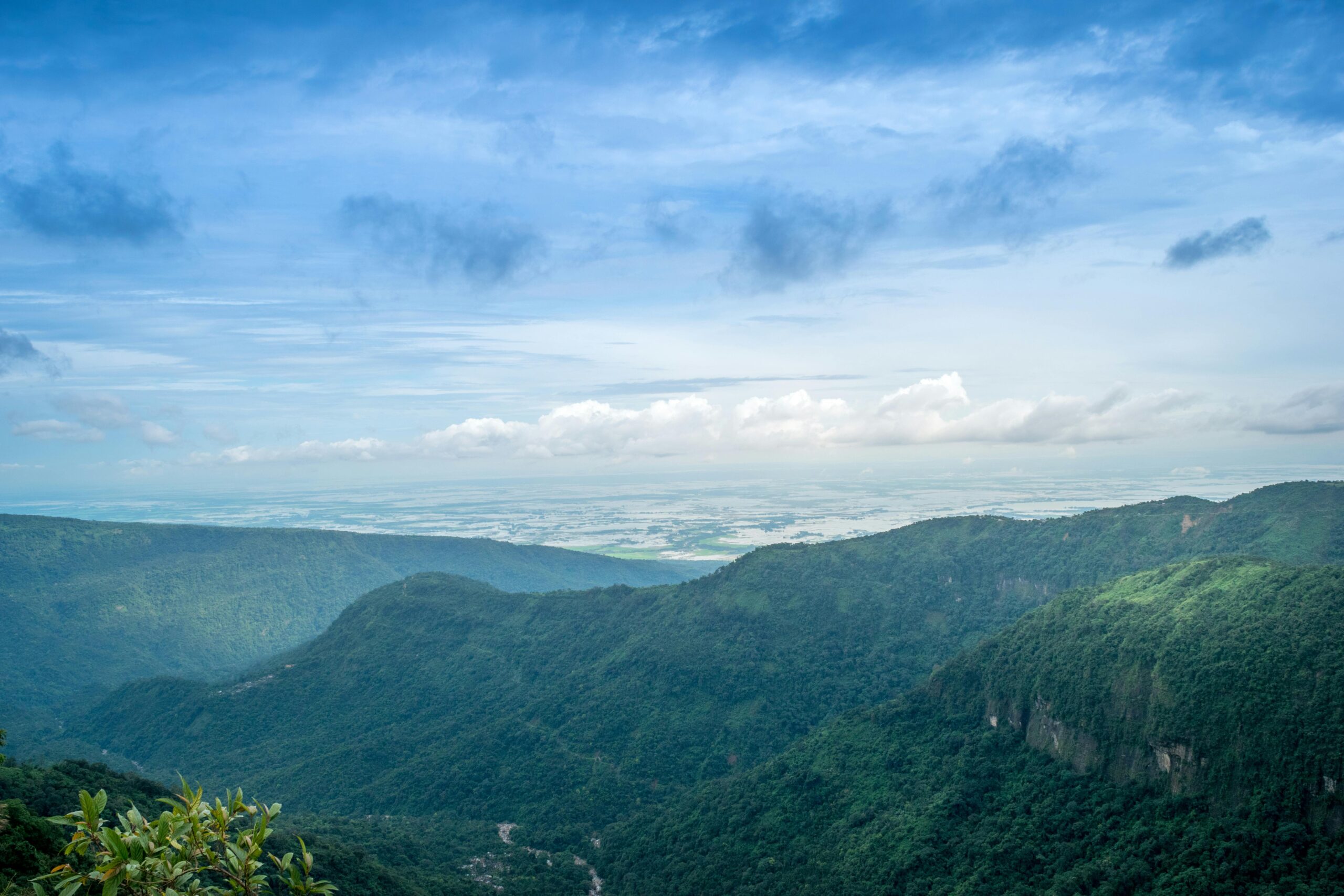
Meghalaya is easy to overcrowd on paper. Shillong, Sohra, living-root bridges, caves and the Dawki side all look close enough to combine, yet each transfer, walk and change of weather uses real time. A good seven-day trip is less about proving that you reached every attraction and more about choosing a route that remains enjoyable when a drive takes longer or the view disappears behind cloud.
This suggested itinerary uses six nights and three regional bases. It is aimed at a first visit with ordinary walking, selected guided activities and enough flexibility to respond to conditions. Travellers who want a demanding trek can adapt one day, but the longer walk should be an intentional choice rather than a compulsory addition for everyone.
Quick answer: how should you divide one week in Meghalaya?
Use two nights in Shillong, two around Sohra, one towards Dawki or Shnongpdeng and a final night positioned for departure. Keep your arrival day light, choose one main activity each full day and allow the final transfer a generous buffer. River clarity, waterfall flow and road conditions vary; book the trip for the range of experiences rather than one guaranteed photograph.
| Day | Focus | Overnight strategy |
|---|---|---|
| 1 | Arrival and Shillong orientation | Shillong |
| 2 | A selected city or nearby cultural day | Shillong |
| 3 | Move towards Sohra with limited stops | Sohra area |
| 4 | A guided walk, cave or landscape day | Sohra area |
| 5 | Transfer towards the Dawki side | Suitable local base |
| 6 | River-area activity and begin return positioning | Shillong or departure-side base |
| 7 | Departure transfer | No tight additional sightseeing |
Decide what your group can comfortably do
Discuss walking distance, steps, early starts and motion sensitivity before booking the vehicle. A route that suits four active friends may be tiring for a family with toddlers or an older traveller. Ask each person to identify one priority and one activity they would happily skip. That makes later changes easier and avoids treating the most demanding option as the only valid experience.
Meghalaya Tourism publishes suggested itineraries that help establish the relationship between these areas. Use them as geographical guidance, not as a requirement to copy an operator’s entire stop list. A private trip should reflect your group’s pace, while a shared trip needs clear agreement about what is included and how much flexibility is available.
Day 1: make arrival about settling in
If you enter through Guwahati, treat the onward journey to Shillong as a meaningful part of the day. Flight or train delays can affect the road transfer, so avoid a prepaid activity immediately after the expected arrival. Confirm the meeting point, vehicle category and whether the driver can wait if the incoming service is delayed.
Once in Shillong, take a short walk near your accommodation and find a straightforward dinner. Check the next morning’s start with the driver and ask about any current road or weather concerns. The first night is also the right time to confirm rooms for later bases, particularly if the trip crosses a busy weekend.
Day 2: choose a Shillong-focused day
Use the morning for a manageable selection of city sights, a market-area exploration or a guided cultural activity. Keep attractions in a sensible cluster rather than repeatedly crossing the city. A viewpoint is worthwhile when conditions support it, but should not become a long wait that displaces the rest of the day.
Leave time for food and an afternoon rest or unstructured walk. Ask a local guide about appropriate conduct in community and sacred spaces. Do not treat every forest or village path as an unrestricted public attraction. Learning why a place matters is more valuable than collecting a location tag.
The Shillong itinerary provides additional local ideas. Select only the ones that fit this broader week; trying to complete a separate three-day Shillong plan in one afternoon would defeat the point of the route.
Day 3: travel to Sohra with a short stop list
Check out after breakfast and use the transfer day for a few suitable stops, not every attraction beside the road. Ask the driver to explain which activities require meaningful walking and which are brief viewpoints. Keep luggage secure and avoid leaving valuables visible in a parked vehicle while the whole group explores.
Reach the accommodation with enough daylight to understand its setting and discuss day four. Confirm meal availability, room warmth and the easiest access route. Rural accommodation can be comfortable while offering fewer spontaneous dinner options than Shillong, so establish the practical details before the evening.
Day 4: choose between a demanding walk and a lighter day
If you want a living-root-bridge outing involving a substantial descent and return climb, make that the main activity. Ask about the current trail, guide arrangements, steps, weather and a sensible turnaround. Wear suitable footwear, carry water and avoid booking another tiring excursion for the afternoon simply because it appears nearby on a map.
Travellers who prefer a lighter day can choose an appropriate cave visit, shorter guided walk or a limited set of landscape stops. Cave access may involve slippery surfaces, low passages or steps; ask about the specific route rather than assuming every cave is an easy indoor attraction. Your guide should understand the group’s limitations before entry.
For more destination context, see the Sohra and Cherrapunjee guide. Waterfall conditions change with rainfall, so select the day for its overall experience. A seasonal photograph should not become a promise that the landscape will look identical during your visit.
Day 5: move towards Dawki without adding an endurance test
Plan this as a transfer day with one or two agreed experiences. Ask which road approach is currently recommended and where the overnight accommodation sits relative to the intended river activity. A picturesque property that creates a long backtrack the next morning may not be the most useful base.
If the journey includes a village visit, follow local guidance on entry, behaviour and photography. Buy food or crafts only when you want them, and ask before entering private courtyards or photographing residents. A community is not an attraction that owes visitors access to every part of daily life.
Day 6: treat the river outing as condition-dependent
Before paying for a boat or water activity, ask about current conditions, the exact route, duration, life jackets and any age or ability restrictions. Clear-looking water does not remove the need for competent supervision. Weather and river appearance can change, so consider whether the outing remains worthwhile without the famous transparent-water image.
Allow enough time afterwards to begin your return positioning. A final night in Shillong or another practical departure-side base can reduce stress on day seven. Discuss the choice with the operator according to your actual flight or train time. Avoid leaving a long rural connection until the final morning if a delay would cause a major missed journey.
Day 7: leave with a buffer you can actually use
Confirm the departure transfer the previous evening, including pickup time, vehicle and destination terminal or station. Keep the final morning simple. A buffer is useful only if it remains unbooked; filling it with shopping or an additional viewpoint removes the protection it was supposed to provide.
Carry essential documents, medication and a change of clothing in an accessible bag. Save the transport booking and driver contact offline. If your journey changes, contact the operator early rather than waiting until the original pickup time to explain that you are leaving from a different property.
Vehicle quotes: understand what the rate includes
Ask whether the quote covers the complete route, parking, tolls where applicable, driver allowance, overnight stays and any empty return travel. Confirm daily working expectations and how additional stops are charged. A cheaper headline rate may become more expensive if several necessary elements are excluded.
For a shared tour, check luggage space, group size, pickup arrangements and the exact overnight locations. For a private vehicle, agree that weather or road concerns can change the plan. A responsible driver should not be pressured to recover lost time through unsafe speed or late-night driving.
A transparent budgeting exercise
Separate the shared vehicle cost from per-person spending. Suppose two travellers choose six room nights at ₹3,000 per room, producing ₹18,000 for accommodation. Add a provisional ₹24,000 vehicle allowance, ₹8,400 for meals and ₹4,000 for local guides and activities. The destination subtotal is ₹54,400. A 15% reserve adds ₹8,160, giving ₹62,560 for the pair before travel to the region.
These are illustrative inputs, not checked Meghalaya quotes. Obtain actual prices for your route and vehicle category. Four adults sharing an appropriate vehicle may divide some transport costs, but they also need additional rooms and food. Do not divide the whole two-person total by four and assume that creates a valid group budget.
Packing for changing conditions
Pack layers, a rain shell, comfortable walking shoes and a small day bag. Even when the season is generally suitable for travel, a specific day can be wet or cool. Protect electronics and documents, and keep a dry layer available after a boat outing or long walk.
Avoid carrying equipment you cannot comfortably manage on steps or uneven paths. A reusable bottle, a compact light for ordinary evening access and a power reserve can be useful, but no accessory replaces local guidance. Use the travel backpack selection guide for packing considerations rather than treating any bag as essential to visiting the state.
Choose the season for the experience you value
If clear river views are your main interest, discuss recent local conditions before committing to a specific water activity. If waterfalls are the priority, understand that a drier period can offer a different landscape from monsoon photographs. Neither version is automatically better, but they should not be sold as identical experiences. Keep clothing and footwear suitable for the forecast rather than packing according to a destination nickname. Around holidays, confirm every overnight room directly and allow for busier road journeys. A flexible attraction list is particularly useful when conditions make one route less appealing than another.
Frequently asked questions
Is seven days enough for all of Meghalaya?
No. A week supports an introduction to selected areas, not complete coverage of the state. The route above concentrates on Shillong, Sohra and the Dawki side. Add time or design a different trip if you want to explore another region properly.
Is a root-bridge trek compulsory?
No. Choose it only when the trail and return climb suit your group. A lighter guided activity can provide a rewarding day without requiring everyone to complete the most demanding walk. Ask about the actual route rather than judging difficulty from photographs.
Will Dawki definitely have clear water in winter?
No destination can guarantee the appearance of a river on your exact day. Recent rainfall, conditions and local operations matter. Book an itinerary with several enjoyable experiences so one weather-sensitive image does not determine whether the entire holiday feels successful.
Official planning references
Reviewed 21 October 2026: Meghalaya Tourism’s suggested routes and its Shillong–Sohra itinerary information. This seven-day sequence and budget are editorial suggestions. Reconfirm road conditions, community access, guides and activity operations before departure.